
Heat Tape Under Your Gutter Guards Won't Work - Here's Why
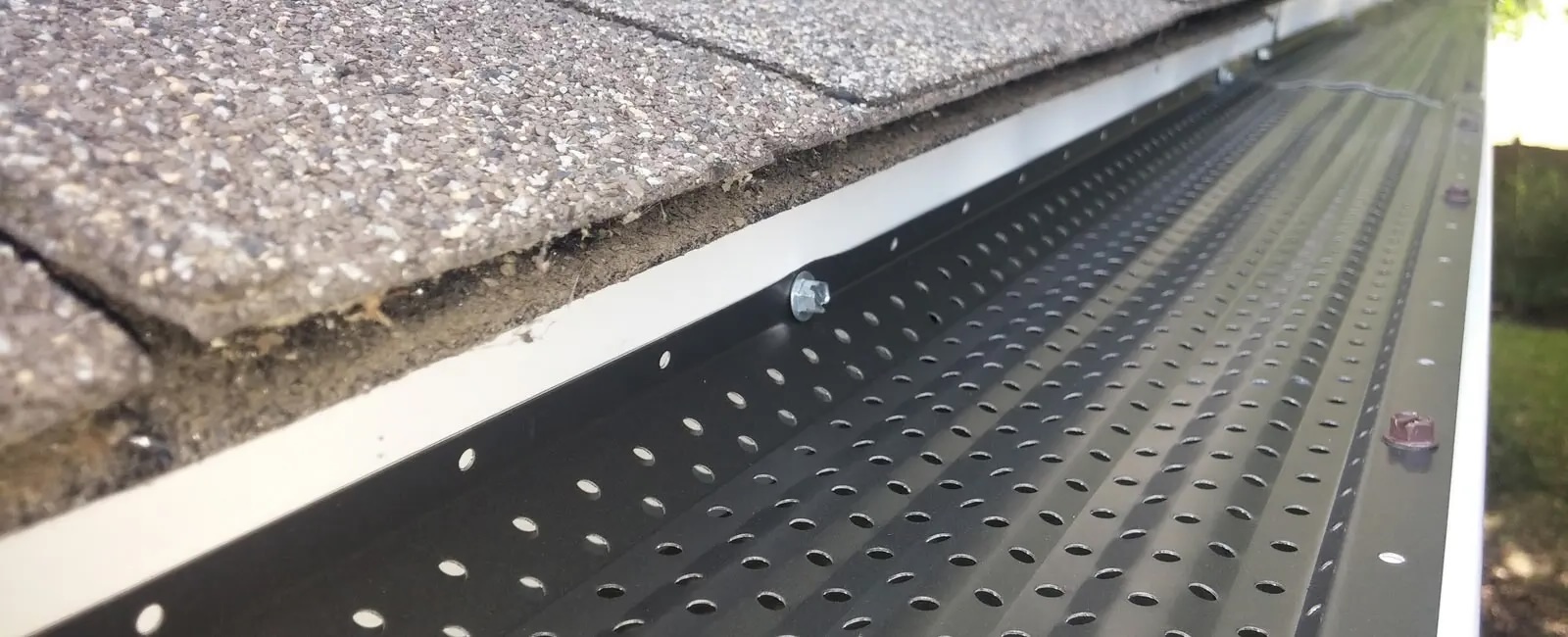
Gutter guards are a smart investment - they keep leaves and debris out of your gutters and reduce how often you have to clean them. Heat tape is also a smart investment - it keeps ice dams from forming by creating a heated melt path from your roof to the ground.
But here’s the problem: when you install both, the standard heat tape placement stops working. If you just run heat tape inside the gutter and down the downspout - and then put gutter guards on top - you’ve effectively blocked the heat tape from doing its job.
Here’s why, and what a properly spec’d system looks like.
What Happens When Snow Sits on Your Gutter Guard
Gutter guards are designed to block debris. They do their job well. But they also block something you actually want to fall into the gutter: snow.
When snow falls, it lands on top of the gutter guard mesh and stays there. Unlike debris, snow doesn’t stay solid - it melts from above (sun) and the heat tape on the roof warms things nearby. But here’s the issue: the heat tape inside the gutter is separated from the snow by the guard itself. The heat can’t get through to melt the snow sitting on top.
So you end up with:
- Snow piling up on top of the guard - it can’t fall through the mesh, and there’s nothing below to melt it from beneath.
- Melt water from the roof running into the snow on the guard - the roof heat tape is doing its job, sending water down the slope. But that water hits the wall of snow and ice sitting on the guard.
- Water backing up and refreezing - with nowhere to go, the melt water pools against the snow pack on the guard and refreezes in the cold air, building up an ice dam right at the eave. This is exactly the problem the heat tape was supposed to prevent.
- Icicles forming along the guard - as water slowly drips over the edge and freezes, icicles form. These can damage the guard, the fascia, and anything below when they fall.
The frustrating part: Your heat tape is on and working. Your gutter guards are installed correctly. Everything looks right - and yet you still get ice dams and icicles. The issue isn’t either product failing; it’s that the system is incomplete without heat tape on top of the guard.
The result is maddening: your heat tape is running, your gutter guards look great, and you still end up with ice dams and icicles every winter. The fix is straightforward - but it requires understanding the full system.
The Solution: Heat Tape on Top of the Guard
The snow on your gutter guard needs a heat source directly underneath it - which means heat tape must be installed on top of the guard surface, not just inside the gutter.
Here’s what the complete system does:
- Heat tape on top of the guard melts the snow sitting on the mesh. The cable runs along the top surface of the guard, keeping it above freezing so snow can’t accumulate and form a solid ice barrier.
- Melt water drips down through the guard mesh into the gutter. Once the snow on the guard turns to water, it flows through the holes in the mesh (which is exactly what the mesh is designed for - to let water pass).
- Water hits the heat tape inside the gutter and stays liquid. The heat tape in the gutter catches the drips and keeps them from refreezing before they can flow to the downspout.
- Water flows down the downspout to ground level. The heat tape in the downspout keeps that path clear too, completing the full drainage chain.
What “On Top” Actually Means During Installation
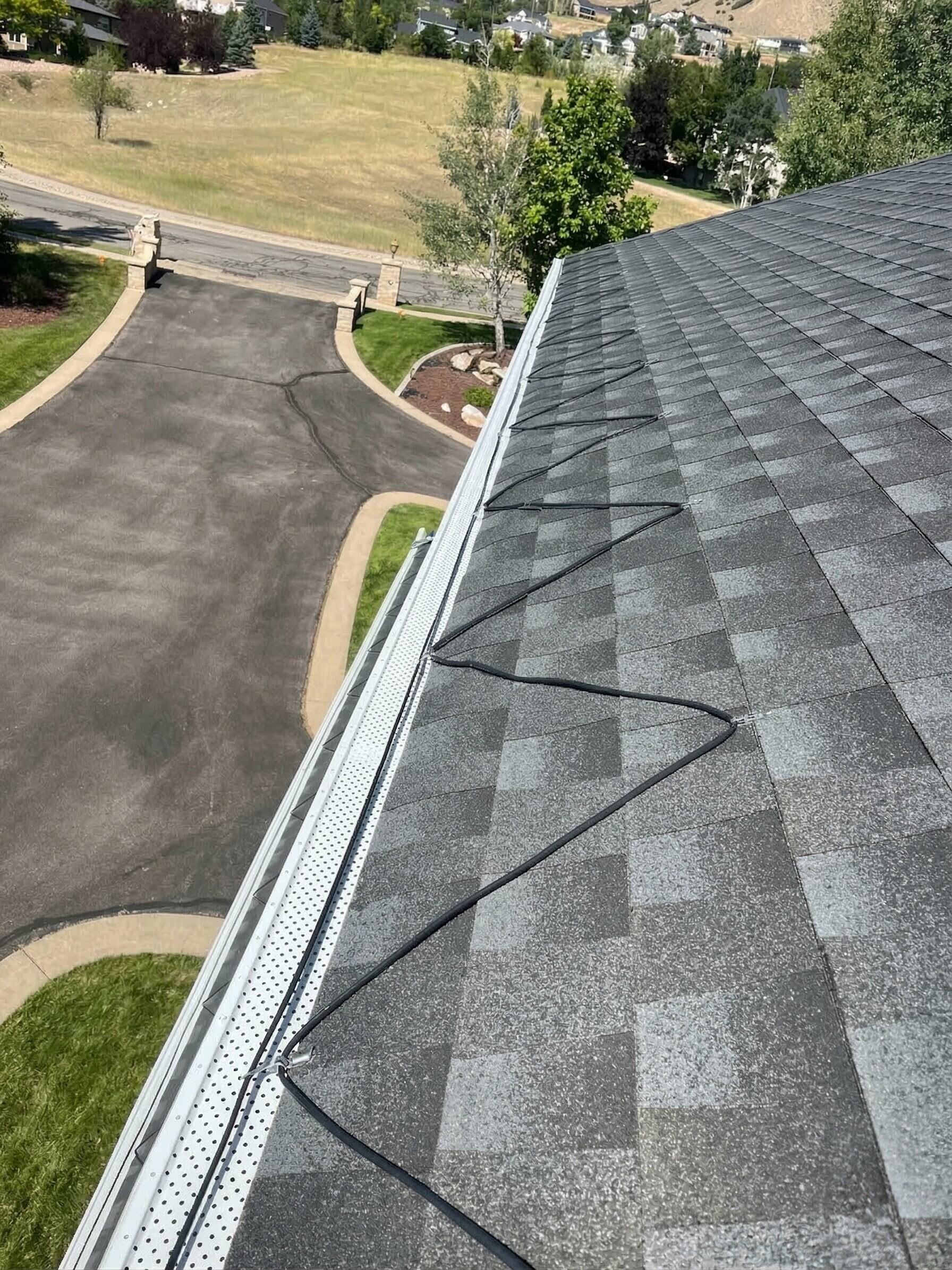
The heat tape that runs on top of the gutter guard is a separate cable (or a continuation of the same cable, depending on the installation). It lays along the top surface of the guard, running the full length of the gutter. In combination with the heat tape already inside the gutter and downspout, it creates a complete thermal path:
- Roof edge cable → melts snow at the eave and creates a run-off channel
- Guard-surface cable → melts snow that accumulates on top of the guard mesh
- Gutter interior cable → keeps melt water liquid as it flows through the gutter
- Downspout cable → keeps the downspout clear all the way to the ground
Skip any one of these and you have a gap. Gaps fill with ice.
This applies to all gutter guard types. Whether you have traditional perforated aluminum guards, micromesh, or any other style - if snow can accumulate on the surface, you need heat tape on top. Micromesh guards, which are the most effective at blocking debris, also have smaller openings and can be especially prone to snow bridging across the surface.
Does This Mean More Cable and Higher Energy Use?
Yes, a complete system uses more cable than heat tape inside the gutter alone. But the difference in operating cost is modest - and it’s far less than the cost of dealing with ice dam damage or replacing gutters pulled off the fascia by heavy ice.
If energy efficiency is a priority, self-regulating heat tape (which reduces output automatically when temperatures are near freezing) is the right choice for guard-top applications. It runs at lower wattage during warmer periods and ramps up only when it’s coldest - which is also when the ice dam risk is highest.
- Self-regulating cable on the guard surface - efficient output that adjusts to conditions; recommended for guard-top use since the cable must handle varying snow loads and sun exposure.
- Thermostat or smart control - pairing your system with a roof-and-gutter thermostat means the system only runs when outdoor temps and moisture conditions actually require it, cutting unnecessary runtime.
- Proper sizing - an oversized system for your lineal footage wastes energy; an undersized one doesn’t get the job done. Our team calculates the right wattage per linear foot for your specific exposure.
Already Have Heat Tape That Isn’t Working?
If you’ve had heat tape installed and still get ice dams or icicles, it’s worth asking whether your current installation includes guard-surface coverage. Many systems were installed before gutter guards were added, or were spec’d without accounting for them.
In most cases, adding guard-top cable is a straightforward retrofit - the existing gutter and downspout cable stays in place, and the new cable is routed along the guard surface. No ripping out the old system.
We assess the full system, not just the cable. When Reel Good Gutters evaluates your home for heat tape, we look at what gutter protection you have, how your roof drains, and where the ice dam risk points are - then spec the cable placement to cover all of them.
Need gutters, repairs, or a free estimate? We're ready.
Contact Us Today →